Phia
Complete
Product Design
Strategy
Role/Contract
Product Designer
Strategist
Timeline
Fall 2025
Tools
Figma, Notion

Overview
Fashion-forward smart shopping
Style meets sustainability
Redirects you to second-hand shopping options
Fashion Ecosystem
Allows you to create collections from multiple shopping sources

Solution
Premium Tier
Since many rewards programs are standard and lack customization, new users might opt out if they feel they aren't getting the most value.

Who benefits from this?
Introducing two tiers would help active users benefit from the reward system, while passive users still access benefits with constraints.
Having two tiers would allow users to feel like they are intentionally growing their fashion ecosystem, not subscribing to a scheme they don’t understand.
Demand Forecasting
Before adding to cart, users are prompted to take a look at the trend analysis data provided by Phia.

Who benefits from this?
Impulsive shoppers can now access predictive data to help them pause and consider their purchasing decisions.
Big brands who want consistent traffic quality and high return rates from clicks, rather than those led by hype.
Gifting with points
Through personalized rewards feeds, shoppers can spend their points on engaging with the fashion community around them, discovering new brands, and even gifting their friends.
Who benefits from this?
Shoppers and users who do not want to spend their points on more items, but on experiences or services.
Users who want to gain points through community engagement rather than shopping.
Stylist’s looks & closet
Stylists, fashion-creators and other members of the fashion community can share items in their closet as looks, allowing shoppers to expand their range of search, while also gaining traction through increased discovery.
Who benefits from this?
Fashion service-providers and other community members who seek engagement/traction.
Users who want access to (and support) underground brands, fashion services and clothing items that are intensionally sourced, not just trending on social media.
Free Trial Subscription
Users on the free tier can enjoy a 14-day free trial, unlocking rewards and offerings from the Pro tier.
Who benefits from this?
Shoppers and users who are not sure about committing to a paid rewards system without understanding its offerings first.
Users seeking a hyper-personalized feed tailored to their patterns and interests from multiple sources, rather than just following trends.
Process
Consumption is ruled out
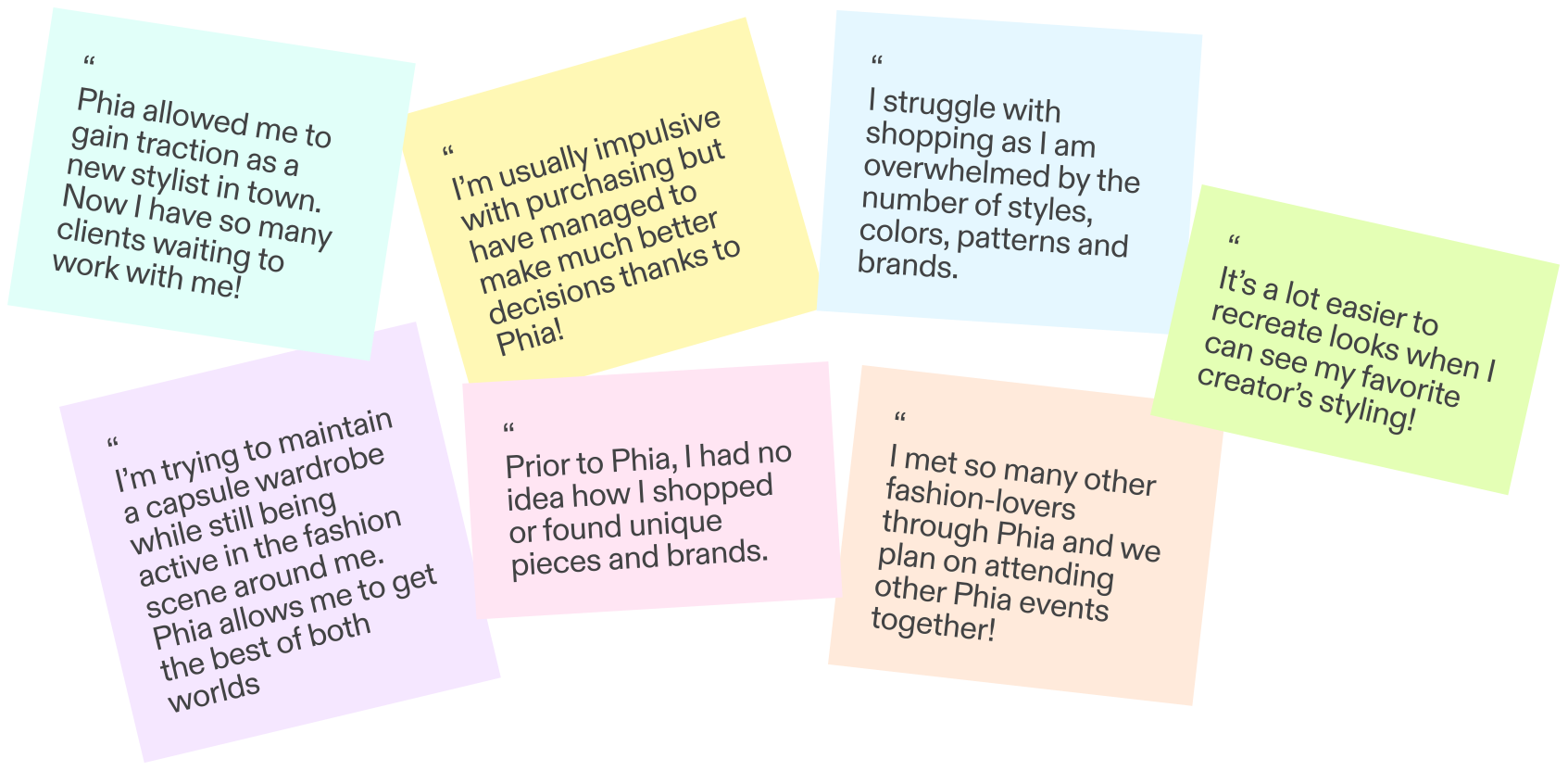
People crave experiences over material objects
Programs that reward users with unique activations and experiences seem to attract consumers organically.
Fashion creates third spaces
Community attracts a greater deal of new users for rewards programs than monetary benefits that programs offers.

Strategy
In order to keep every type of shopper in mind, a new rewards program at Phia would have to grow into an ecosystem and tap into community through other entry points.
Spending points
Instead of turning points straight into more buying, Pro members redeem them across three kinds of reward, and the choice of which stays with them.
Community & Events
Experiences build connections a discount can't, and gives people somewhere to wear what they bought.
Services
Points that make clothes last longer are the clearest way to back up a sustainability claim.
Connecting users to tailors, repair shops, cobblers, dry cleaning, mending workshops and other local service-providers.
Store Credit
Autonomy means existing option have to stay.
Store credit option is kept for anyone who just wants to shop, or lives in a city Phia hasn't reached yet.
Earning points
Nobody loses points for buying new; they just earn faster for buying secondhand, or choosing a sustainable alternative:
Buying new through Phia rather than elsewhere
Reselling or donating, by linking apps like Depop
Attending an event, then posting photos of it or the outfit worn
Deal Intelligence
Many products follow predictable price cycles, and a shopper can easily overpay by 20–40% by not waiting a few weeks. Phia already tells people whether a price is fair. It doesn't show demand, and it leaves the decision to impulse, which is where carts get abandoned.
Price History & Product cycle
Showing how often the price of an item moves, how many views, add-to-carts, sell-through and stock left, plus known sale periods and where the item is in its life cycle.
Baseline & Projected price
What the item normally costs: a 90-day average with its low and high, stretched to 365 days when there's enough history.
Confidence
Users are shown if a product is worth buying on the spot or after a wait, each defined by a price variation from the baseline.

UX Decisions
Shoppers need to know when and how much an item costs, not a probability; expressed in words. Every verdict carries a plain high or low confidence label, and when an item has too little price history the widget says so instead of guessing.
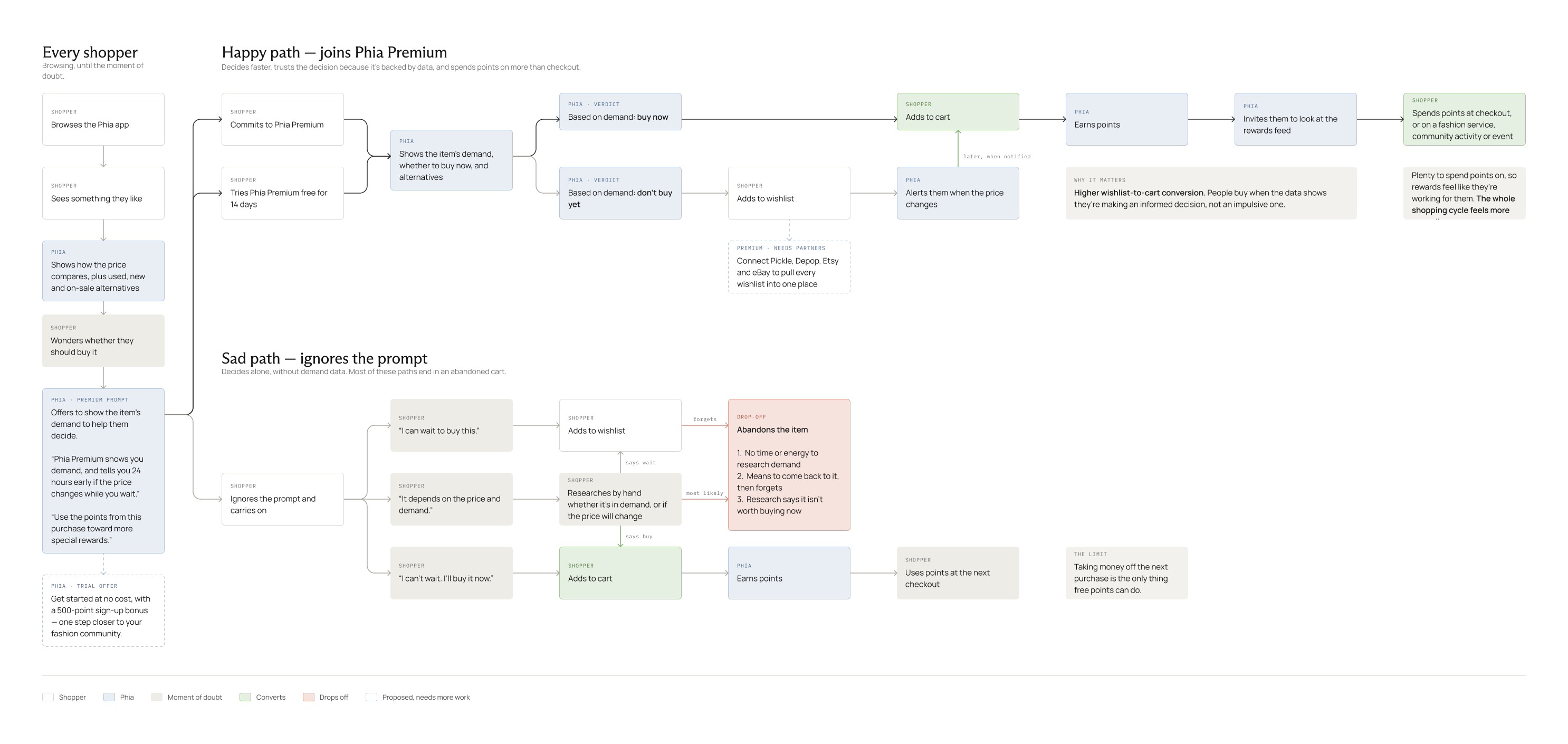
Points invite saving. A careful shopper might bank a sign-up bonus for later without exploring what the premium tier can actually offer them.
So we decided that unused points don't carry forward or compound. This restriction also made the trial easier to design. Instead of a balance to manage, it's one decision; pick the thing you want to try, book it, show up, before your free 14-day trial ends.
I built the premium tier around local designers, stylists, tailors, cobblers and event hosts as every reward agrees with Phia's mission.
Both sides have a reason to be there. Local providers get customers they couldn't reach alone, and a reason to send their own clients to Phia. The ecosystem grows from both ends.
Launch
Gift Cards & Spend Power
2 - 3 months
Once brands agree to be on the roster, with a spending limit set by the brand or Phia
Deal Intelligence
1 - 1.5 months
Includes training a prediction model that reports confidence, not percentages
Sourcing & vendor management
1.5 - 2 months
An MVP, with a sourcing team finding providers and an ops team onboarding them
Adoption & Scaling
3 - 8 months
Marketing, onboarding users, initial feedback loops

Reflection
Most of the system lives outside the interface.
The best rewards depend on sourcing, operations and partner incentives. Designing the roll-out order had to follow how fast we could realistically source and onboard vendors.
A reward is a positioning decision.
Store credit says Phia is a place to spend. A repair voucher or a seat at a swap says it's a place to get more out of what you own. Choosing the rewards was really choosing what the product is for.